



Navigating Complex Plumbing Needs in Milwaukee’s Diverse Building Types
Licensed, Bonded & Insured. Certified Wisconsin Master Plumber — License #1066
 5.0Top Rated Service 2026verified by TrustindexTrustindex verifies that the company has a review score above 4.5, based on reviews collected on Google over the past 12 months, qualifying it to receive the Top Rated Certificate.
5.0verified by TrustindexTrustindex verifies that the company has a review score above 4.5, based on reviews collected on Google over the past 12 months, qualifying it to receive the Top Rated Certificate.
5.0verified by TrustindexTrustindex verifies that the company has a review score above 4.5, based on reviews collected on Google over the past 12 months, qualifying it to receive the Top Rated Certificate.
House Repipe Plumbing Service, Seasonal Plumbing Service
2026: Is Your Sump Pump Putting Your Basement at Risk?
Optimal Plumbing
May 11, 2026
Single sump pumps can fail during storms. Learn how Milwaukee area homeowners can prevent basement flooding with backup systems and inspections.
For many homeowners in the Milwaukee area and throughout Southeastern Wisconsin, basement flooding isn’t a matter of if—it’s a matter of when (especially lately!).
And in many cases, the risk comes down to one thing: a single sump pump system.
If your home relies on just one sump pump, you may not realize it—but your basement could be vulnerable during the exact moment you need protection most: heavy rainstorms and power outages.
Why Single Sump Pump Systems Often Fail
Most homes were originally built with a single sump pump. While that may have worked at the time, it creates a major point of failure today.
Like any mechanical system, sump pumps wear down over time. The problem is, they don’t usually give clear warning signs before failing.
Instead, failure often happens:
- During heavy storms
- When groundwater levels are highest
- When the pump is working its hardest
- Or when the power goes out completely
That’s when water can begin to enter your basement quickly—sometimes before you even realize there’s a problem.
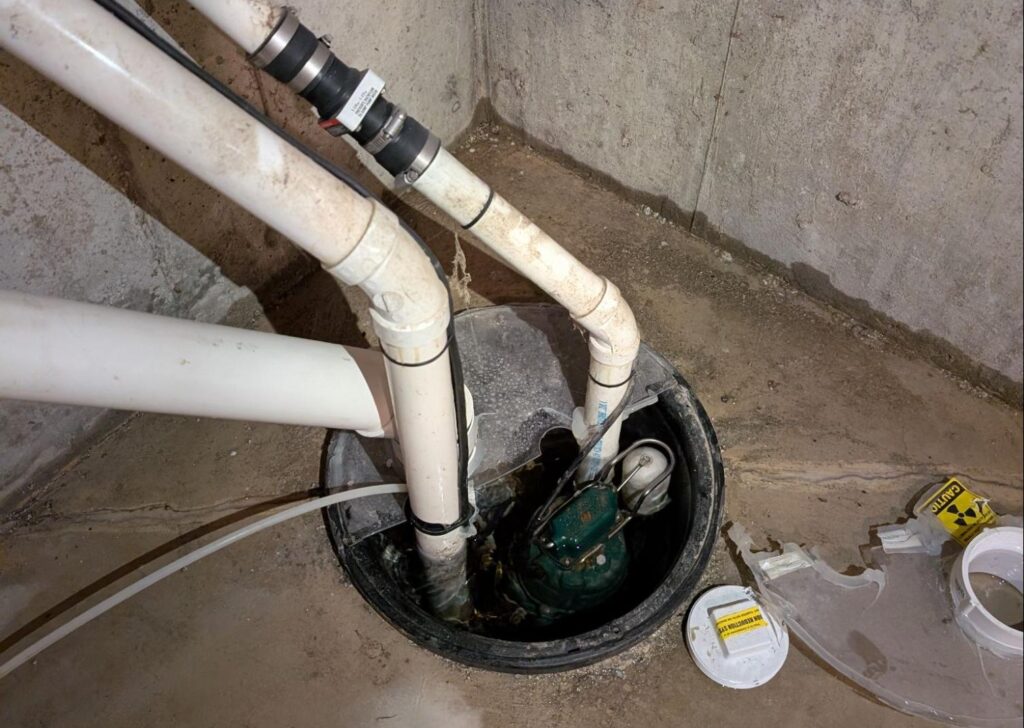
The Real Cost of a Failed Sump Pump
Many homeowners don’t think about their sump pump until it stops working. By then, the damage can already be done.
- Financial Impact: Refinishing a flooded basement can cost $20,000 to $40,000 or more, depending on the size and finishes.
- Insurance Limitations: Many insurance policies have limited coverage for sump pump failures—often around $10,000, and that’s before deductibles.
- Personal Loss: Beyond the financial impact, there’s also the loss of personal belongings:
- Family photos
- Keepsakes and heirlooms
- Furniture and finished spaces
These are items that can’t simply be replaced.
Why Power Outages Make the Problem Worse
One of the biggest risks during storms is power loss.
A standard sump pump relies entirely on electricity. If the power goes out—even briefly—your pump stops working at the exact time it’s needed most.
That’s why relying on a single pump can leave your home unprotected.
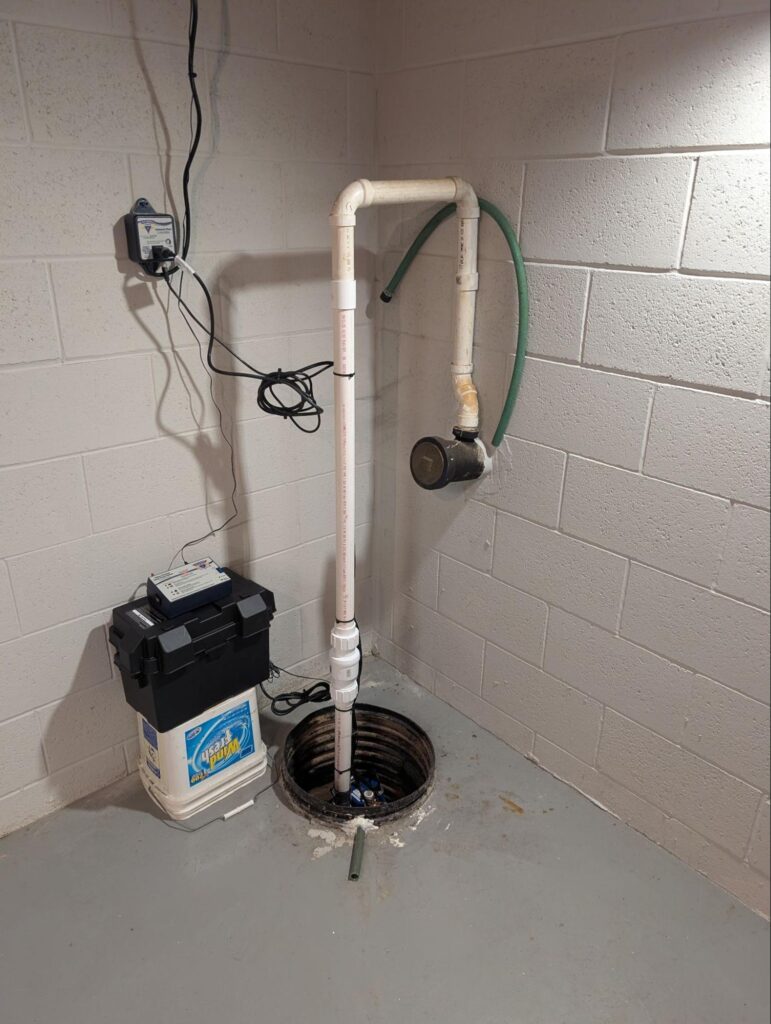
The Solution: Combination Sump Pump Systems
To reduce risk, many homeowners are upgrading to combination sump pump systems—a setup designed for redundancy and reliability.
These systems include:
- Dual Pump Protection: A primary pump handles daily use, while a secondary pump is ready to take over if needed.
- Battery Backup: Even if the power goes out, the backup system continues running—often providing hours of protection during storms.
- Higher Capacity Performance: Modern systems can move large volumes of water quickly, helping prevent overflow during heavy rain.
- Smart Alerts: Advanced systems can alert you when:
- The backup pump activates
- The primary pump fails
- Maintenance is needed
Added Protection: WiFi Monitoring
For even more peace of mind, sump pump systems can be equipped with WiFi monitoring modules.
These allow you to:
- Receive alerts directly to your phone
- Monitor system performance remotely
- Stay informed even when you’re away from home
This can be especially helpful during travel or extended time away.
Don’t Wait for a Failure to Take Action
Even if your current sump pump worked during the last storm, it’s still aging—and every use brings it closer to potential failure.
A proactive inspection or upgrade can help you:
- Identify weak points early
- Add redundancy to your system
- Protect your home from unexpected flooding

Want to Make Sure Your Basement Is Protected?
If you’re unsure about your current sump pump setup, Optimal Plumbing can help. Contact us today by clicking the button below or call us at 414-387-2332 to schedule a sump pump inspection or learn more about combination pump systems.
We’ll explain your options clearly and help you determine what’s best for your home—no pressure.
5.05.0Top Rated ServiceVerified by TrustindexTop Rated Service
- 5.0 Excellent rating Last 12 months
- New reviews collected regularly Recent review activity detected
- Leading Service Google Maps rating and review data
- Responds to customer reviews 100% response rate within 48 hours
- Verified by Trustindex Based on real customer reviews Learn more
Posted on Google
 Rachel Richter11 October 2026
Trustindex verifies that the original source of the review is Google.
Miltos did a phenomenal job of not only identifying the issues quickly & accurately, but also repairing them thoroughly, explaining next steps, explaining house plumbing maintenance steps to plan for over time for best practice, & he went above & beyond to ensure for an outstanding customer experience! I will absolutely call them with all my plumbing needs!!Posted on Google thomas tang9 October 2026Miltos from Optimal Plumbing came out to replace the under-sink heater at my Milwaukee condo. He was friendly, professional, and he took the time to walk me through what was wrong and what he was doing about it. Nothing felt pushed. He fixed the problem, quoted a price that seemed fair for the work, and left me with the sense that I knew exactly what I was paying for. That kind of straightforwardness is rare, and I’d call him again.+0Posted on Google
 Dijana Pozder8 October 2026I recommend Optimal plumbing.Miltos did a great job he installed commercial water heater at my motel. Thank you guys so much.+0Posted on Google
 George Diderrich7 October 2026Great work!!Posted on Google
 Gregory Kostka7 October 2026Professional competentPosted on Google
 Tom O'Loughlin6 October 2026Great experience from the first call through the installation and repairs. Allison in the office punctual, friendly and accurate with the information I requested. The guys who did the repair were on time, professional and even requested a vacuum to clean up the area when the repairs were complete. I will be using Optimal for all our business's plumbing needs going forward.Posted on Google
 Emily Schoen3 October 2026Miltos was great! He explained everything thoroughly, was respectful of our home and got the job done in a timely manner. I wouldn’t hesitate calling Optimal Plumbing for our next plumbing need.Posted on Google
 Lisa Klein1 October 2026Wonderful, prompt and honest service. Terrific communication with regular text messages, present reasonable options to fit budget and exceptionally detailed clean up. Clearly care about their customers and seek to educate the customer to prevent bigger issues. Very friendly and would absolutely suggest to any home owner.Posted on Google
 Marianne Nolan1 October 2026Finally found a plumber that I trust. They explain what needs to be done and the cost and how long it’s going to take. They are my plumber.!!!Posted on Google
 Katie Carlson30 September 2026⭐⭐⭐⭐⭐ I couldn’t be happier with the work this company did on our shower installation! From start to finish, they were prompt, professional, knowledgeable, and incredibly trustworthy. They took the time to make sure everything was done correctly and made the entire process easy and stress-free. It’s clear that they take pride in their work and truly care about their customers. I would absolutely recommend them to anyone looking for reliable, high-quality plumbing work. Great company and great people — I wouldn’t hesitate to call them again for any future plumbing needs!
Recent Articles
Revolutionizing Milwaukee: How Advanced Plumbing Systems Enhance New Constructions
Commercial Plumbing Insights
Spotting Hidden Water Leaks in Your Home
Pipe Plumbing Service
Why a Professional Plumbing Inspection is Crucial for Your Milwaukee Property
Residential Plumbing Guidance
We’re Proud to Be Google Guaranteed!
Commercial & Residential Plumbing


Are you looking for a trusted plumbing company?
At Optimal Plumbing, we combine expertise, efficiency, and cutting-edge technology to provide unparalleled plumbing solutions for both commercial and residential clients.
- Serving the Milwaukee Area
- contact@optimalplumbingwi.com
- 414-387-2332